
Sep 03, 2026
Overall, the indices suggest the industry has exited the extreme volatility of the pandemic but entered a phase where cost pressures remain a challenge.总体而言,这些指数表明,该行业已经摆脱了疫情的极端波动,但进入了成本压力仍然是一个挑战的阶段。
Tim Wall | DALL-E 蒂姆·沃尔|dall - e
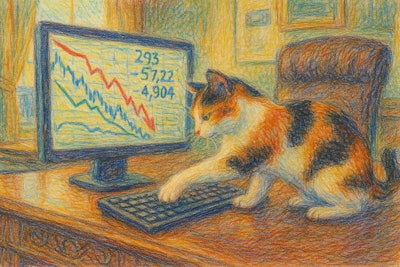
U.S. pet food prices and manufacturing costs have moved in tandem over the past seven years, but the data show that inflationary pressure has shifted, according to an AI-powered analysis of Federal Reserve Bank of St. Louis data.根据对圣路易斯联邦储备银行数据的人工智能分析,美国宠物食品价格和制造成本在过去七年中一直在同步变化,但数据显示,通胀压力已经发生了变化。
 Tim Wall | DALL-E 蒂姆·沃尔|dall - e
The chart above tracks two key indicators: the Consumer Price Index (CPI) for pet food and treats, and the Producer Price Index (PPI) for dog food manufacturing. Both measure different points in the value chain, and the gap between them helps illustrate margin dynamics, cost recovery and pricing strategies across the industry.上面的图表跟踪了两个关键指标:宠物食品和零食的消费者价格指数(CPI)和狗粮制造业的生产者价格指数(PPI)。两者都衡量价值链上的不同点,它们之间的差距有助于说明整个行业的利润率动态、成本回收和定价策略。
From late 2018 to late 2025, retail-level pet food prices, as measured by the CPI, rose about 27%. During the same period, manufacturing-level prices climbed roughly 34%. That steeper increase at the producer level reflects higher costs for labor, energy, packaging and key ingredients such as animal proteins and grains. Much of the sharp escalation occurred between 2020 and 2022, when supply chain disruptions pushed ingredient costs to historic highs. The CPI followed, though with a slight lag, as brands and retailers gradually passed through cost increases to the market.从2018年底到2025年底,以CPI衡量的零售级宠物食品价格上涨了约27%。同期,制造业水平的价格上涨了约34%。生产者价格的大幅上涨反映出劳动力、能源、包装以及动物蛋白和谷物等关键原料的成本上升。大部分急剧升级发生在2020年至2022年之间,当时供应链中断将原料成本推至历史高位。随着品牌和零售商逐渐将成本上涨转嫁给市场,CPI也随之上涨,不过略有滞后。
By 2023 and 2024, the pattern shifted. Manufacturing prices continued rising, but retail prices began to soften slightly, even dipping in 2024 before edging back up in 2025. That temporary decoupling suggests manufacturers stabilized production costs, while retailers adjusted promotional activity or pricing strategies to maintain volume in a more price-sensitive environment. For brands, the compression between PPI and CPI growth rates signaled a period of tighter margins.到2023年和2024年,这种模式发生了变化。制造业价格继续上涨,但零售价格开始略有走软,甚至在2024年下降,然后在2025年回升。这种暂时的脱钩表明,制造商稳定了生产成本,而零售商则调整了促销活动或定价策略,以便在对价格更为敏感的环境中保持销量。对于品牌而言,PPI和CPI增速之间的压缩预示着一段时间的利润紧缩。
In 2025, elevated manufacturing costs appear to have become the new baseline rather than a temporary spike. For the broader marketplace, the modest rise in retail prices since 2023 may contribute to more cautious purchasing patterns and closer scrutiny of value propositions. Companies operating in premium, grain-free or protein-rich segments may feel this most acutely, given their higher exposure to volatile input costs.到2025年,制造成本的上升似乎已成为新的基准,而不是暂时的飙升。对于更广泛的市场而言,自2023年以来零售价格的温和上涨可能会导致更谨慎的购买模式和对价值主张的更密切审查。在优质、无谷物或富含蛋白质领域经营的公司可能会最强烈地感受到这一点,因为它们的投入成本波动较大。
Overall, the indices suggest the industry has exited the extreme volatility of the pandemic era but entered a phase where cost pressures remain a challenge.总体而言,这些指数表明,该行业已经摆脱了大流行时代的极端波动,但进入了成本压力仍然是一个挑战的阶段。